What can rural municipalities learn from working with the clean energy transition?
A new RECET report brings together lessons and experiences from three years of working with rural municipalities across Europe.
How can rural municipalities turn climate ambitions into practical action? And what makes local energy planning work in practice?
The new RECET report What can rural municipalities learn from working with the clean energy transition? brings together key lessons, approaches and experiences from the three-year project, which supported 30 municipalities across five countries.
From climate ambitions to local action
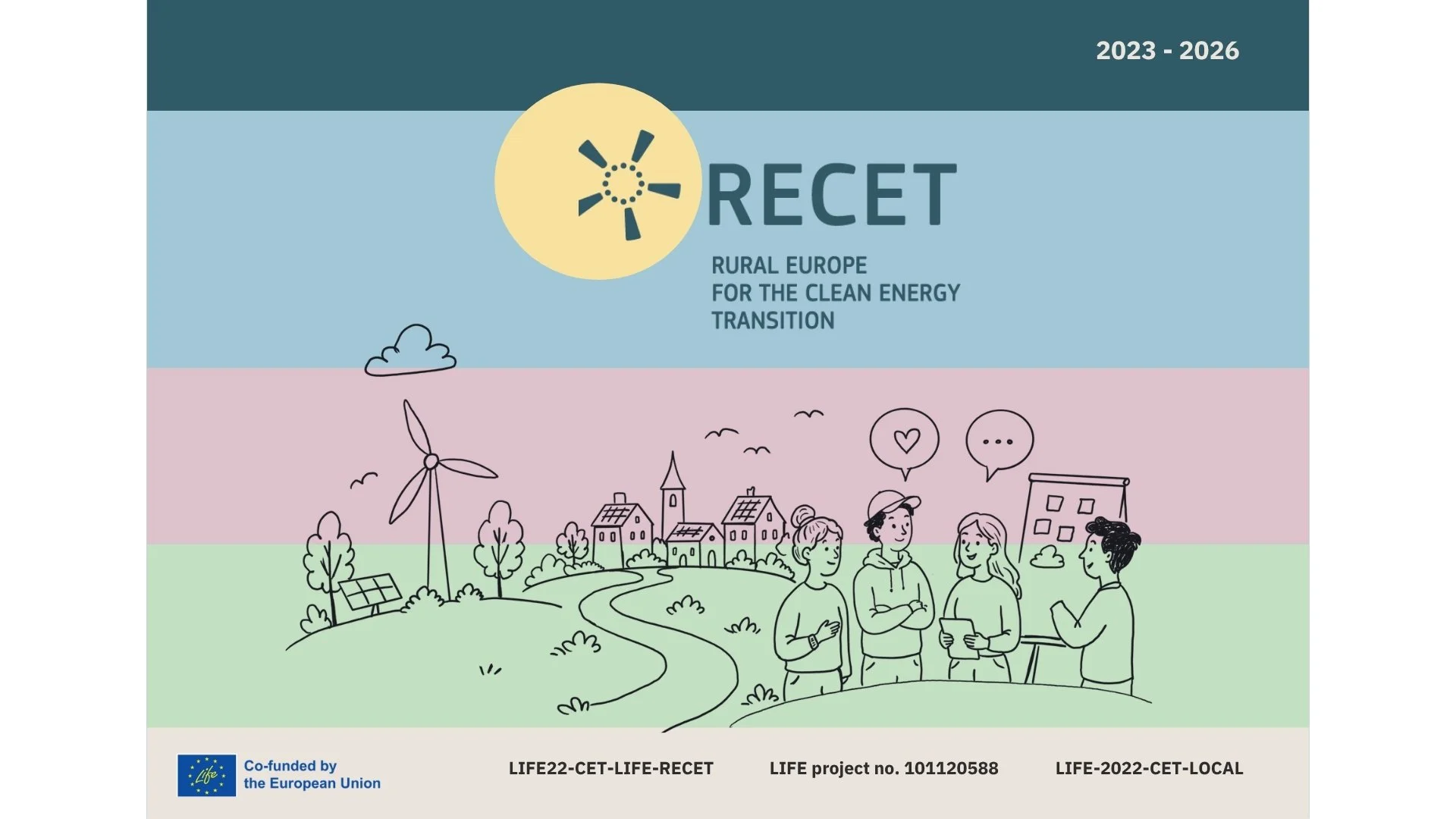
Discover the lessons, approaches and experiences that can help rural municipalities move the clean energy transition forward.
The report highlights the importance of local engagement, participation and co-creation in developing plans that reflect the needs and priorities of each community. Rather than treating energy transition as a purely technical challenge, RECET explored how local knowledge, existing initiatives and collaboration can help make the transition more relevant and achievable.
One of the key lessons is to keep the process simple and break large challenges into smaller, manageable steps. The report describes how small, practical actions can build confidence, capacity and momentum, while creating a foundation for more ambitious measures over time.
The report also emphasises that one size does not fit all. Energy plans and engagement methods need to be adapted to local circumstances, priorities and resources. At the same time, municipalities can benefit from working together, sharing tools and experiences, and building on existing plans, networks and initiatives.
The experience from Iceland is also featured in the report. In Northeast Iceland, Eimur and SSNE worked with all ten municipalities to identify practical climate and energy actions, contributing to the development of the RECET Action Bank, a co-created collection of 49 actions. The regional climate action plan was subsequently completed and politically approved by all municipalities in the region in spring 2026.
In the Westfjords, RECET contributed to integrating climate and energy planning into the region's first Regional Spatial Plan and supported municipalities in developing emissions accounting and practical climate actions.
Across the project, the report points to a common theme: successful clean energy transition depends not only on plans and technologies, but on people, cooperation and the ability to turn shared ambitions into local action.
Read the full report:
What can rural municipalities learn from working with the clean energy transition? – RECET Final Report 2026