Lessons from Sweden

All Municipalities in Blekinge Take Major Steps Towards Active Energy Planning
Energy planning is no longer optional—it’s a necessity that affects the climate, the energy system, and municipal finances. Municipalities are expected to take responsibility for a long-term sustainable energy supply, both to meet climate goals and to ensure security and cost-efficiency for residents. With national policy documents and EU directives in place, the role of municipalities in the energy transition is becoming increasingly clear: it’s about smart planning, collaboration, and engaging citizens, businesses, and local stakeholders.
Blekinge now stands as a strong example: all municipalities in the county have begun work on local energy planning. With support from the RECET project, through Energikontor Syd, and in collaboration with regional actors, the municipalities have embarked on an important journey toward sustainable energy systems. It’s a step that strengthens the county’s efforts to meet future climate targets.
Energy Groups Become the Hub of Local Efforts
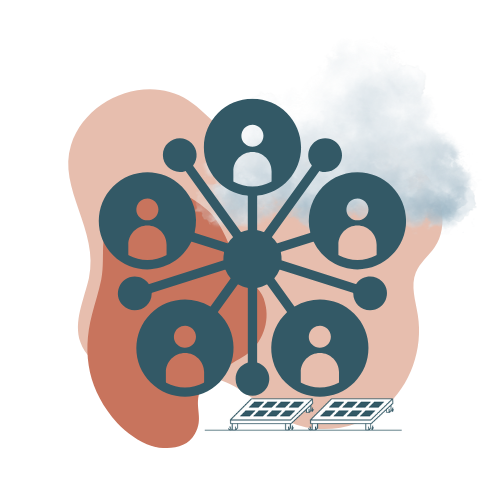
By the end of 2025, a key milestone was reached: all five municipalities have formed local energy groups. These groups are more than meeting places, they are engines for climate action at the local level. They bring together civil servants from various departments, including urban planning, technology, finance, and environment, and serve as the central hub for municipal energy work. The groups are responsible for driving planning forward, tracking goals, and ensuring diverse perspectives are considered.
“It’s a structure that fosters engagement and makes the work more efficient,” says Anna Månsson, project manager at the Energy Agency Southern Sweden. “By gathering expertise and responsibility in one place, it becomes clearer who does what and how the municipality’s energy transition can evolve step by step.”
From Starting Point to Dynamic Development
Initially, the municipalities were inspired by a linear process model from the EU Commission’s research center JRC. The model was easy to understand and communicate, which helped kickstart the work. But in practice, energy work is rarely linear. The model has now evolved into a circular and dynamic process, where feedback, flexibility, and local conditions are central. It allows for adjusting goals, leveraging experience, and adapting efforts to new needs.
“The circular model reflects reality better, even though it’s more complex. The most important thing is that each municipality finds a working method that suits its local context,” continues Anna Månsson.
Progress So Far
The municipalities are in different phases, but all are working toward the same goal: a long-term sustainable energy supply.
Sölvesborg: Energy plan adopted by the municipal council and implementation started
Karlshamn: Proposal out for consultation
Karlskrona: Working on the first draft
Ronneby and Olofström: Recently started the process
Citizen Dialogues on Sustainability in Karlskrona, Blekinge
In 2025, Karlskrona municipality hosted two citizen dialogue meetings focused on sustainability and the clean energy transition. RECET took part in a broad planning group together with local associations, municipal representatives, and regional actors. Participants discussed how residents can contribute to a more sustainable municipality and shared their views on Karlskrona’s role as a forerunner in the shift toward clean energy.
“By linking local efforts to the county’s climate and energy strategy, we ensure that municipal actions contribute to Blekinge’s shared goals,” concludes Anna Månsson.
With these steps, Blekinge’s municipalities are well on their way toward a sustainable energy system, and the next chapter in the journey is just around the corner.
Blekinge Municipalities Strengthen Local Energy Planning Through International Collaboration
Nearly two years ago, three municipalities in Blekinge—Karlshamn, Ronneby, and Sölvesborg—embarked on a transformative journey in local energy planning through their participation in the international project RECET. Facilitated by Energikontor Syd, RECET aims to support municipalities in developing strategic energy plans that align with climate goals and local development needs.
Now, Karlskrona is seeing a powerful boost through the complementary project Enercracy, which reinforces and expands the work initiated under RECET. While RECET has focused on capacity-building and structured planning processes, Enercracy brings a citizen-centered approach, encouraging broader participation and democratic engagement in energy-related decisions, especially in rural areas, where local ownership and inclusion are key to long-term success.
Two Projects, One Vision
The synergy between RECET and Enercracy lies in their shared ambition: to empower municipalities with the tools, knowledge, and community support needed to accelerate the energy transition. RECET has provided a framework for energy planning and cross-border learning, while Enercracy strengthens the social dimension and thereby ensuring that energy planning is not only technically sound but also locally anchored.
Together, the projects have enabled:
Development of tailored energy plans for participating municipalities
Increased dialogue between local authorities, citizens, and stakeholders
Integration of European best practices with regional priorities
Enhanced capacity to meet national and EU climate targets

A Model for Regional Collaboration
Energy Agency Southern Sweden’s role as a bridge between international expertise and local implementation has been key to the success of both projects. By combining RECET’s strategic planning tools with Enercracy’s participatory methods, Blekinge is emerging as a model for how regional collaboration can drive meaningful change in the energy sector.
With continued support from national programs and local initiatives, Blekinge is well-positioned to become a leading region for sustainable, inclusive, and prosumer-driven energy transformation.
Strengthening Regional Energy Planning in Blekinge, Sweden
In collaboration with Blekinge’s five municipalities, Region Blekinge, and the County Administrative Board, the Energy Agency Southern Sweden has launched a new intermunicipal energy planning network. The initiative aims to foster long-term strategic collaboration by sharing experiences and integrating regional and national perspectives into local energy planning.
Lessons from Sölvesborg:
A Pioneer in Local Energy Planning
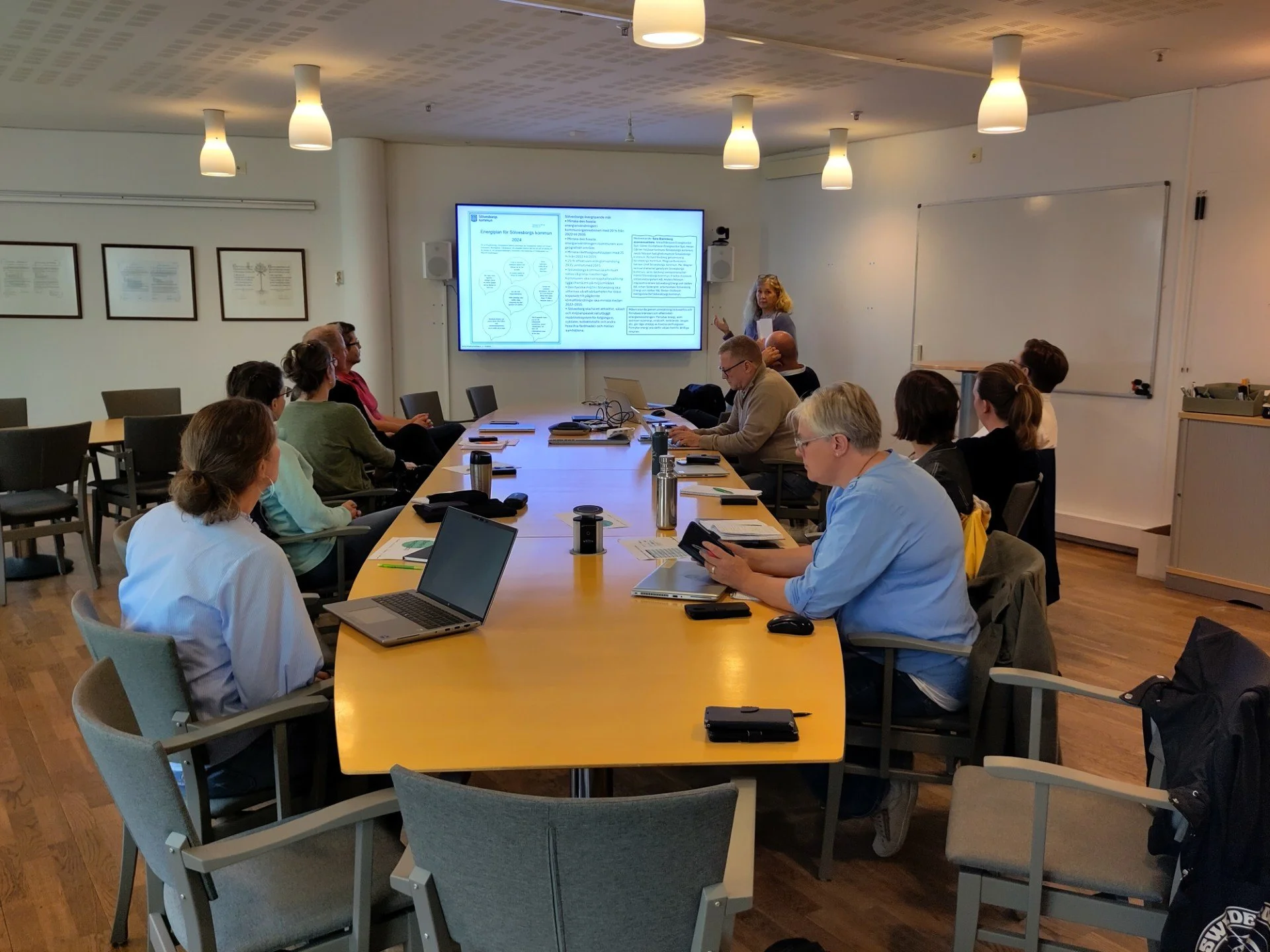
Sölvesborg was the first municipality in Blekinge to adopt a new energy plan, with support from RECET. At the network’s inaugural meeting in Karlshamn, Helen Gårner, Environmental Coordinator and Energy Planning Lead in Sölvesborg, shared insights from their journey:
“Start with what you want to do—that’s how you get a concrete plan to work with,” she emphasized.
Helen highlighted the importance of action over perfection, noting that energy planning is a continuous process that evolves over time. She also credited Energy Agency Southern Sweden’s support—facilitating meetings, preparing materials, and leading workshops—as a key success factor.
Following the adoption of the energy plan, the Energy Agency Southern Sweden continued its support through energy coaching for local businesses as part of Energilyftet, a national initiative supporting companies in their energy transition. Through Energilyftet, 11 companies have signed energy and climate contracts with the municipality. The municipality’s role was limited to identifying this work as an action in the energy plan, helping connect local priorities with an existing, externally funded initiative.
Ongoing Exchange and Capacity Building
The network will convene 1–2 times annually, featuring guest speakers to enrich discussions and strengthen municipal energy planning. At the Karlshamn meeting, Anders Svedberg from the Swedish Energy Agency presented on the interplay between energy planning and broader municipal strategies.
This initiative is part of the RECET and GK Blekinge projects, co-funded by Life Clean Energy Transition (LIFE CET), Region Blekinge, and the Swedish Energy Agency.
Original article: https://energikontorsyd.se/a/utvecklar-engergiplaneringen-tillsammans