Sweden
Municipalities differ in many ways - just like tomatoes.
Their conditions vary depending on factors such as energy production, grid capacity, and transport infrastructure.
However, the importance of energy planning, and its connection to business development, competitiveness, and spatial planning, is something they all have in common.
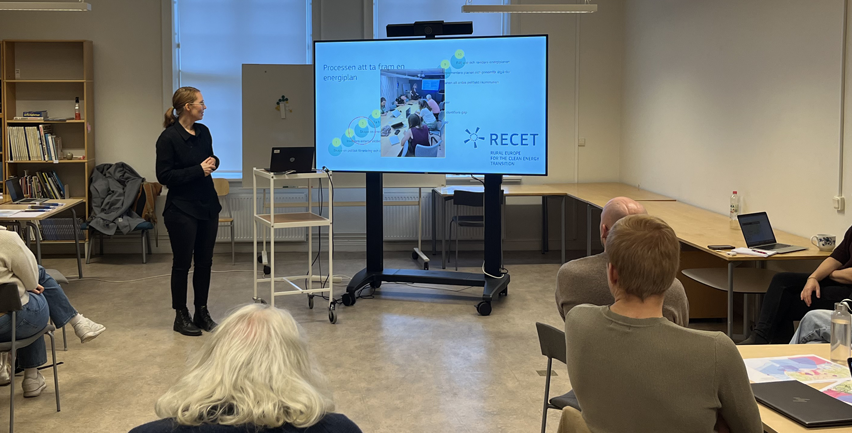
Precisely for this reason, it becomes especially valuable to share lessons learned from these processes. RECET shared key lessons learned at the IN-PLAN national final conference in Gothenburg in February 2026.
The presentation highlighted several insights from our work:
First, municipalities are diverse and operate under very different conditions.
This means that they require tailored support when developing and
implementing energy plans - there is no one-size-fits-all approach.
Second, developing a solid understanding of the current situation is crucial.
Without a clear baseline, it becomes difficult to set a realistic direction for future actions and prioritise effectively.
Third, goal-setting processes can sometimes become extensive and focused primarily on producing the final document (the energy plan itself) rather than driving action. Shifting the focus towards concrete activities can help move the process forward more efficiently and build momentum for continued work.
Finally, frameworks such as ISO 50001 for energy management systems can provide a structured approach for working continuously and systematically with energy planning over time.